
Water Damage Restoration Tips
How to Prevent Mold in Tampa Homes After Hurricane Season Flooding
Published 2026-09-03 · By David Mitchell, Damage Restore Pro
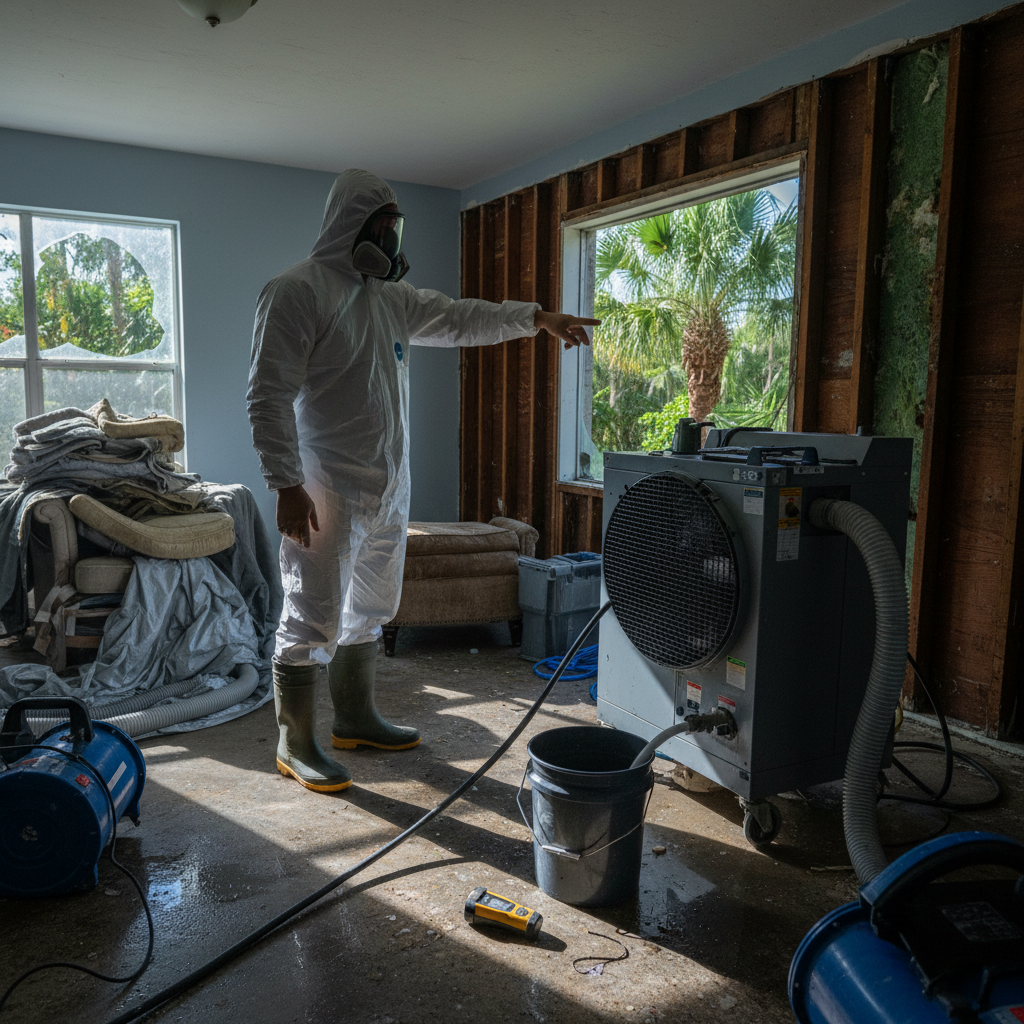
Tampa's humid subtropical climate keeps relative humidity above 70 percent for much of the year, creating ideal conditions for mold after hurricane-driven flooding. Homes near the Tampa Riverwalk or in low-lying neighborhoods around Ybor City often see water intrusion that lingers in wall cavities and under flooring.
Mold colonies can begin forming within 24 to 48 hours when moisture content in building materials exceeds 15 percent. Acting inside that window prevents most infestations.
Assess and Remove Standing Water First
Begin with a systematic inspection of every affected room. Check crawl spaces, HVAC ducts, and behind baseboards where water pools unnoticed. Document water depth with photos and mark high-water lines on walls for insurance purposes.
Remove all standing water using submersible pumps rated for at least 1,800 gallons per hour. Once bulk water is gone, extract remaining moisture from carpets and padding within four hours to limit microbial growth.
After initial extraction, professional Drying and Dehumidification Services become essential to pull hidden moisture from porous materials before it migrates.
Control Humidity and Accelerate Drying
Deploy industrial dehumidifiers sized for the square footage of the affected area. Aim to maintain indoor relative humidity between 40 and 50 percent during the drying phase. In Tampa's climate, outdoor humidity often exceeds 80 percent, so seal windows and use exhaust fans vented outside.
Monitor moisture levels daily with a pin-type meter. Wood framing should reach 12 percent or lower before any reconstruction begins. This process typically takes three to five days in Tampa summers but can stretch to seven days during periods of high rainfall.
Prevent Future Mold Through Targeted Maintenance
Install vapor barriers in crawl spaces and ensure downspouts discharge at least six feet from the foundation. Clean gutters quarterly to handle the 50-plus inches of annual rainfall Tampa receives.
Replace insulation that has been saturated; even after drying, compressed fiberglass loses R-value and can trap residual spores. Consider closed-cell spray foam in flood-prone zones for its resistance to moisture absorption.
David Mitchell has observed that Tampa properties with consistent post-flood ventilation see 60 percent fewer mold callbacks than those dried only with fans.
Need Water Damage Restoration in Tampa?
7134296997