
Water Damage Restoration Tips
Restoring Water Damage in Historic Ybor City Homes Without Ruining Original Cuban Architecture
Published 2026-09-03 · By David Mitchell, Damage Restore Pro
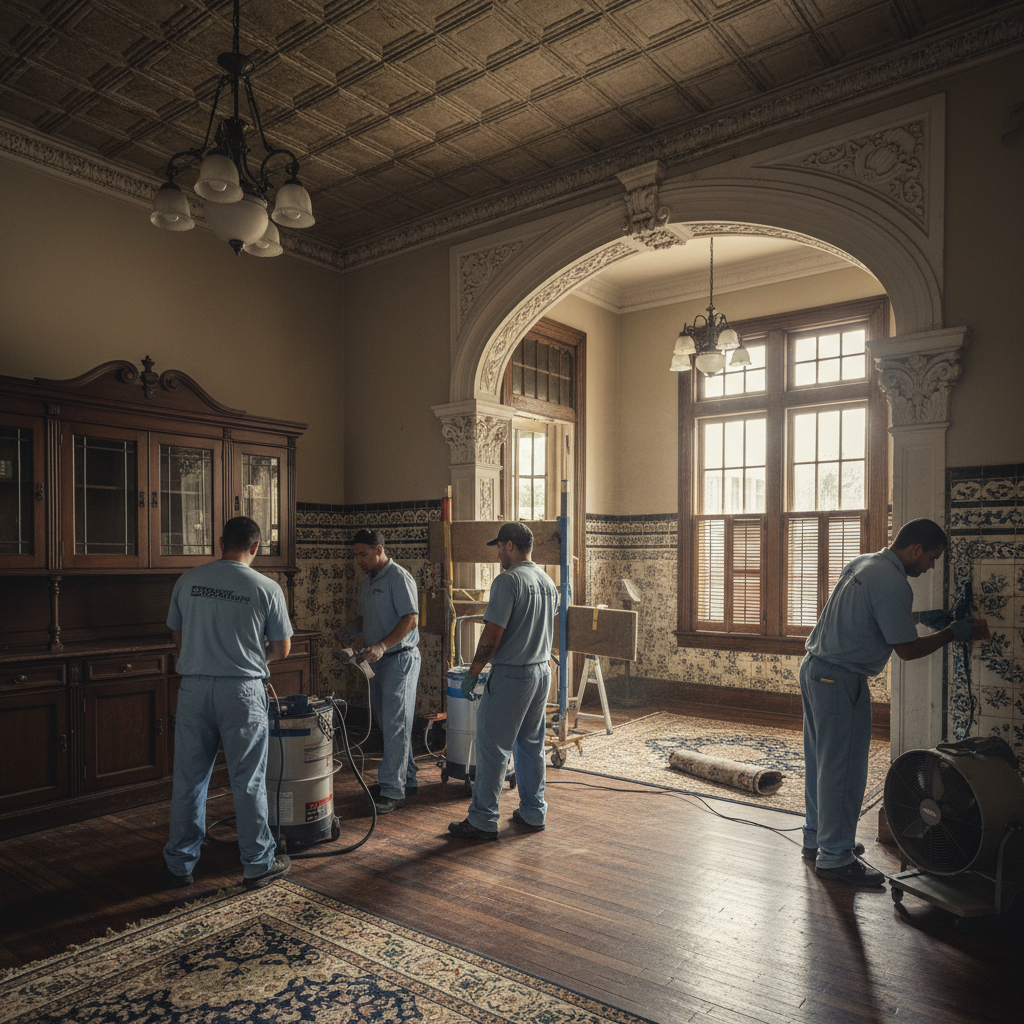
Ybor City homes built in the late 1800s and early 1900s often feature plaster walls, heart pine floors, and ornate tin ceilings that absorb moisture quickly in Tampa's humid subtropical climate. Water intrusion from storms or leaks can lead to swelling wood and cracking plaster within 48 hours if not addressed.
David Mitchell stresses starting every project with a detailed inspection that maps moisture levels without disturbing historic finishes.
Assessing Water Damage in Historic Ybor City Structures
Begin by documenting original materials using non-invasive tools such as infrared cameras. Focus on common entry points like roof valleys near the Tampa Riverwalk district and foundation cracks from settling soil.
- Measure moisture content in heart pine flooring; levels above 16% require immediate intervention.
- Check tin ceilings for hidden corrosion behind seams.
- Test plaster lath systems for delamination in rooms averaging 70% relative humidity.
Avoid cutting into load-bearing walls that define the neighborhood's Cuban architectural character.
Drying Techniques That Protect Original Features
Deploy low-grain refrigerant dehumidifiers set to 80 pints per day alongside air movers positioned 12 inches from surfaces. This approach removes moisture from plaster walls without warping heart pine elements that have lasted over 100 years.
Monitor progress daily with pinless meters until readings stabilize below 12%. Emergency Water Extraction teams often coordinate with preservation specialists to isolate wet zones first.
Preserving Cuban Architectural Details During Repairs
Replace only damaged sections of ornate wood trim using matching species and profiles. For plaster repairs, apply lime-based compounds in thin layers to match the original breathability.
- Clean surfaces with distilled water and soft brushes.
- Apply consolidants to loose areas before patching.
- Allow 7-10 days of controlled drying before painting.
These steps maintain the vibrant historic fabric that draws visitors to landmarks such as the Tampa Bay History Center.
Long-Term Prevention in Tampa's Climate
Install vapor barriers under floors and improve attic ventilation to handle 60+ inches of annual rainfall. Drying and Dehumidification Services can be scheduled seasonally to keep interior humidity between 45-55%.
Regular checks every 6 months help catch issues before they affect tin ceilings or foundation masonry.
Need Water Damage Restoration in Tampa?
7134296997